

For most camping power stations, LiFePO4 (LFP) is the better choice: it is more thermally stable and is commonly rated for thousands of charge cycles, several times more than typical NMC lithium-ion. The trade-off is weight: LFP stores less energy per kilogram, so an LFP station is heavier for the same capacity. Do not charge either chemistry below freezing unless the battery has built-in heating.
- LFP trades a little weight for much longer life and better thermal stability.
- Compare watt-hours, not milliamp-hours, across power stations.
- Charging lithium batteries below 0°C (32°F) can damage them.
- Store a power station partly charged and top it up every few months.
Two lithium chemistries
Almost every portable power station uses a lithium battery, but two chemistries dominate. LFP, short for lithium iron phosphate or LiFePO4, has a nominal cell voltage of about 3.2 volts. NMC, or nickel manganese cobalt, the chemistry in many phones, laptops, and older power stations, runs around 3.6 to 3.7 volts per cell and packs more energy into the same weight.
How they compare
| Factor | LiFePO4 (LFP) | NMC lithium-ion |
|---|---|---|
| Typical rated cycle life | Often 3,000+ cycles to about 80% capacity | Often 500 to 1,000 cycles |
| Energy density | Lower: heavier for the same Wh | Higher: lighter for the same Wh |
| Thermal stability | Higher; more resistant to overheating | Lower; needs careful management |
| Cold charging | Avoid below 0°C unless self-heating | Avoid below 0°C unless self-heating |
| Common today in | Most current camping power stations | Older stations, laptops, phones |
Cycle-life figures are manufacturer ratings under test conditions; real life depends on temperature, depth of discharge, and charging habits.
What it means at camp
- Weekend car campers benefit most from LFP's long life, since a station used often for years will see many cycles.
- Weight-sensitive users who carry a station by hand may notice LFP's extra mass. A 1kWh LFP station commonly weighs around 11 to 13kg.
- Cold-weather campers should keep the station inside the vehicle or tent and charge it once it warms above freezing, or choose a model with battery heating.
Getting the most life from any battery
- Avoid heat. Do not leave a station in a closed car in summer sun.
- Store partly charged. For storage, keep it around 50 to 80 percent and top up every three months.
- Use the right inputs. Stay within the station's rated solar and car-charging limits.
- Keep vents clear. Inverters and chargers need airflow while running.
Field tipPlanning a system? Our power station sizing guide turns your device list into a watt-hour estimate.
Reading the spec sheet
Check four numbers: capacity in watt-hours, continuous AC output in watts, surge output for motors and compressors, and maximum solar input. Then confirm the chemistry, which most brands now list as LiFePO4 or LFP. The FlashFish E-series and EcoFlow DELTA 3 Plus in our reviews all use LFP cells. The TTWEN 12.8V 100Ah RV battery is another LFP option, but it is a deep-cycle battery rather than a complete power station, so its inverter, charging, wiring, and protection must be planned separately.
A few good questions.
Is LiFePO4 better than lithium-ion?
LiFePO4 is a type of lithium-ion battery. Compared with NMC lithium-ion, it typically lasts many more charge cycles and is more thermally stable, but it is heavier for the same capacity.
How long does a LiFePO4 power station last?
Many brands rate their LFP stations for 3,000 or more cycles to about 80 percent capacity. Used a few times a week, that can mean many years of service.
Can I charge a power station in freezing weather?
Avoid charging lithium batteries below 0°C (32°F) unless the station has built-in battery heating. Discharging in the cold is generally fine within the rated range.
Why are LiFePO4 power stations heavier?
LFP cells store less energy per kilogram than NMC cells, so more cell mass is needed for the same watt-hours.
Gear that helps.
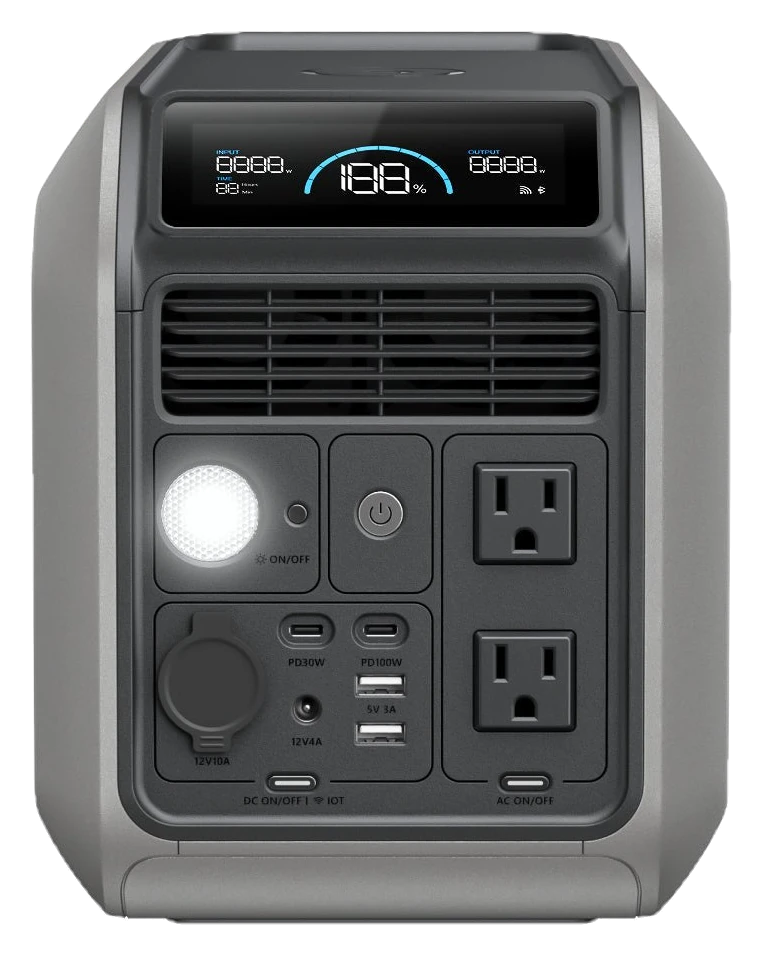
Dabbsson 1000L Portable Power Station, 1,008Wh
Best forCampers, van weekenders and home-backup shoppers who want a lightweight 1kWh LiFePO4-class station
A 1,008Wh portable power station weighing 24 lb with 1,200W output (1,800W in Power-Boost), 600W solar input, eight ports and a 15ms UPS switch.
Read our verdict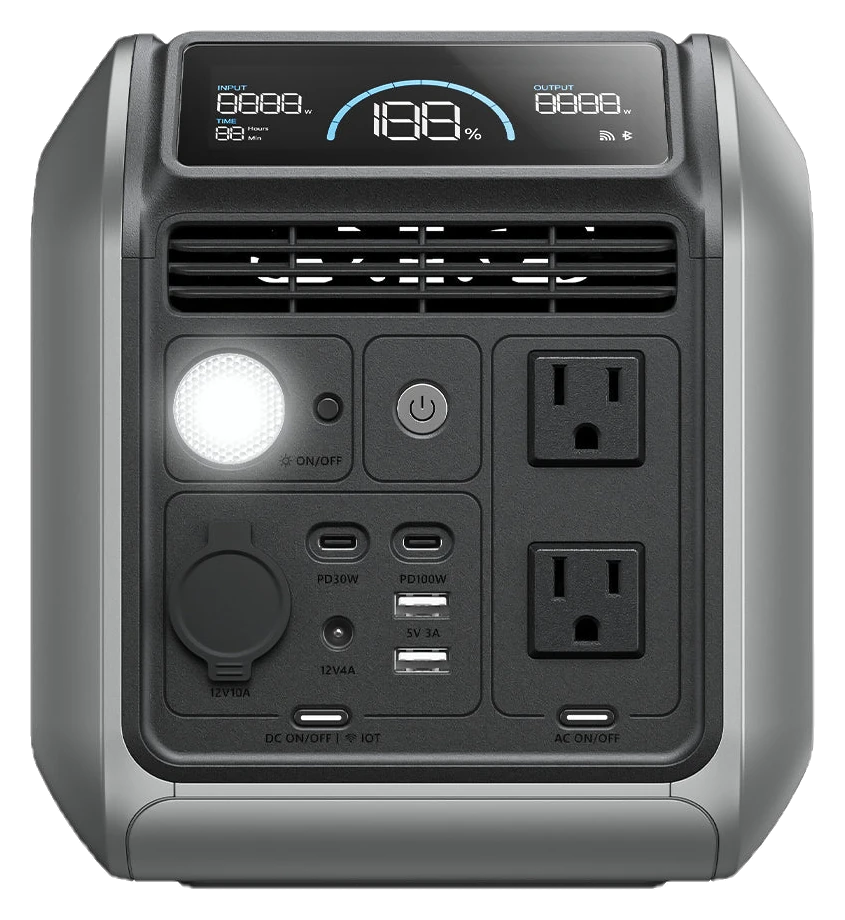
Dabbsson 600L Portable Power Station, 768Wh
Best forCampers, anglers and weekenders who want a small, fast-charging station for devices and a fridge
A 768Wh station at 17.6 lb with 600W output (900W in Power-Boost), 600W input, eight ports and a 1.6-hour full recharge.
Read our verdict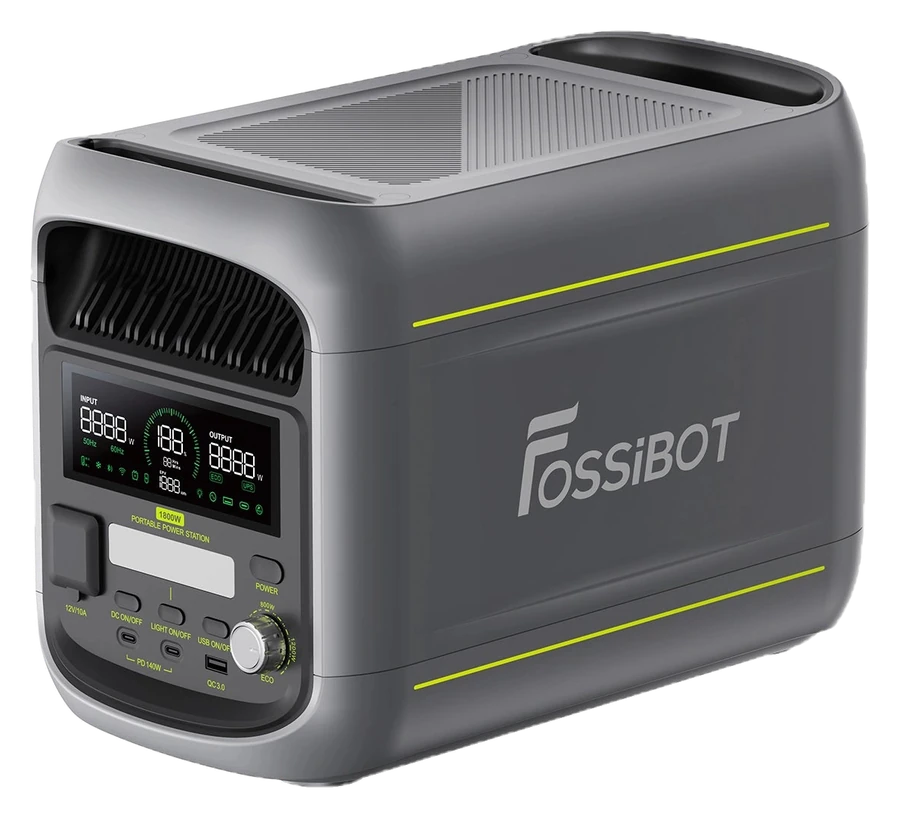
FOSSiBOT F1800 Portable Power Station, 1,800W / 1,024Wh
Best forCampers and home-backup shoppers who want 1.8kW output in a quiet LiFePO4 station
A 1,800W, 1,024Wh LiFePO4 power station with 4,000 cycles, an 80% recharge in 45 minutes, a 5-year warranty and a UPS switch under 10ms.
Read our verdict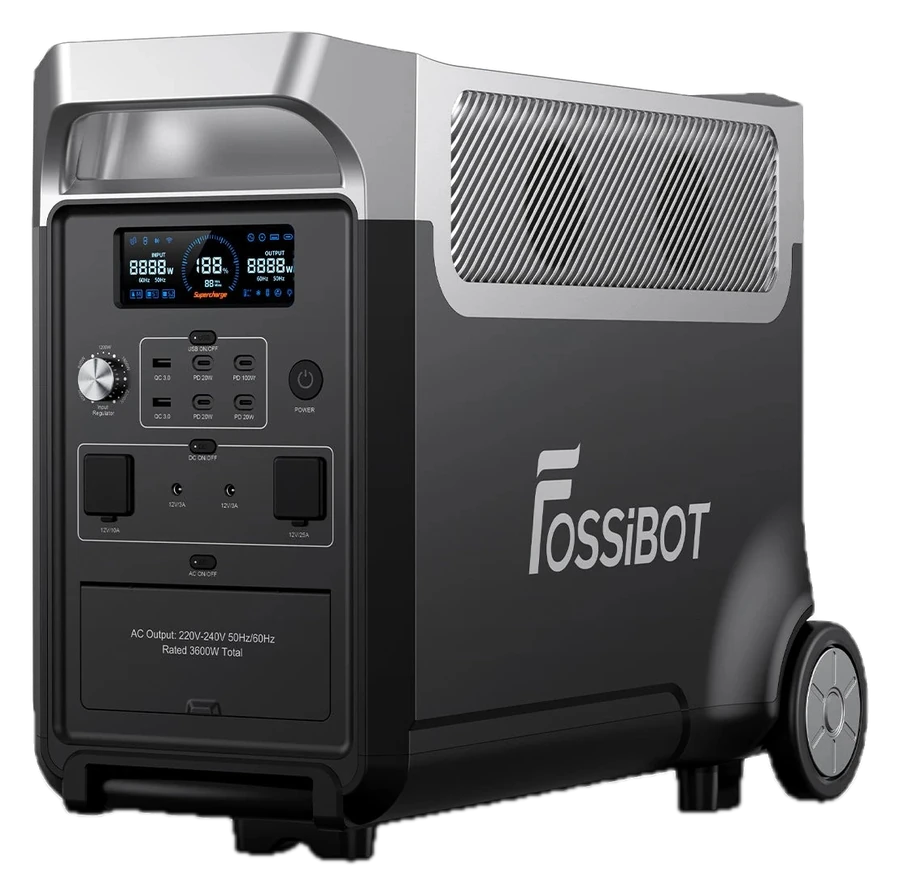
FOSSiBOT F3600 Pro Portable Power Station, 3,600W / 3,840Wh
Best forHome-backup, RV and off-grid shoppers who want a large expandable LiFePO4 station
A 3,840Wh LiFePO4 station with a 3,600W pure sine inverter (7,200W surge), 2,000W MPPT solar input, 15 outputs and expansion to 11.52kWh.
Read our verdict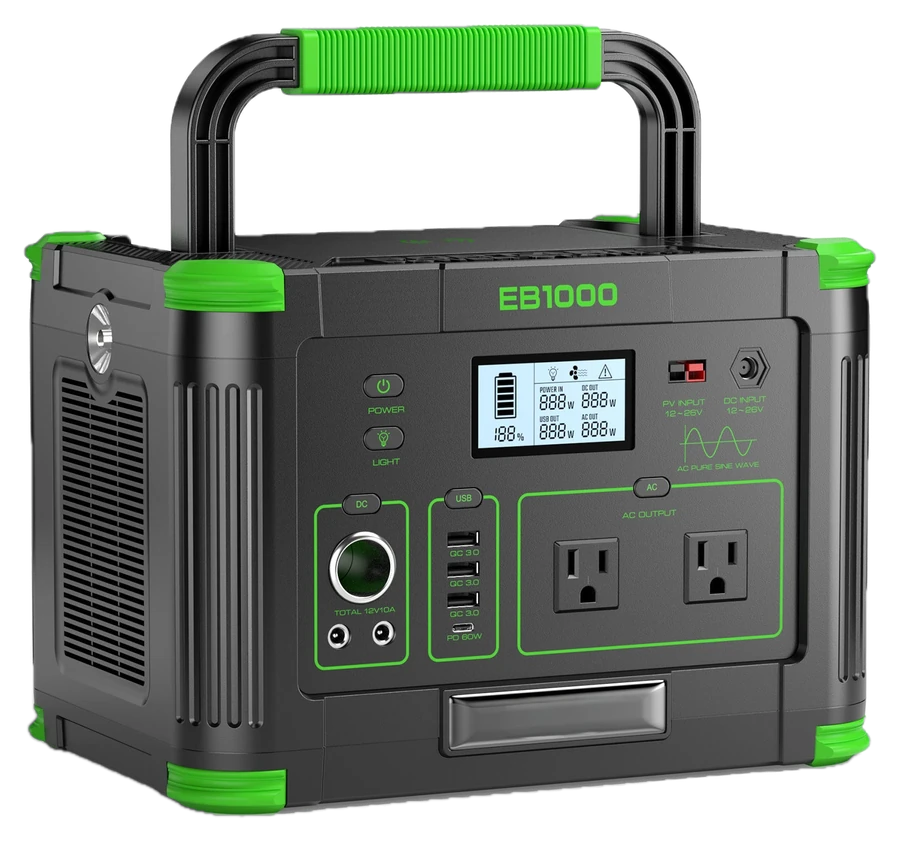
GRECELL EB1000 Portable Power Station, 1,000W / 999Wh
Best forCampers and backup shoppers who want a 1kWh NCM station at a low price
A 999Wh NCM lithium station at 17.9 lb with two 1,000W AC outlets (2,000W peak), USB-C PD 60W, a wireless pad and a 24-month warranty.
Read our verdict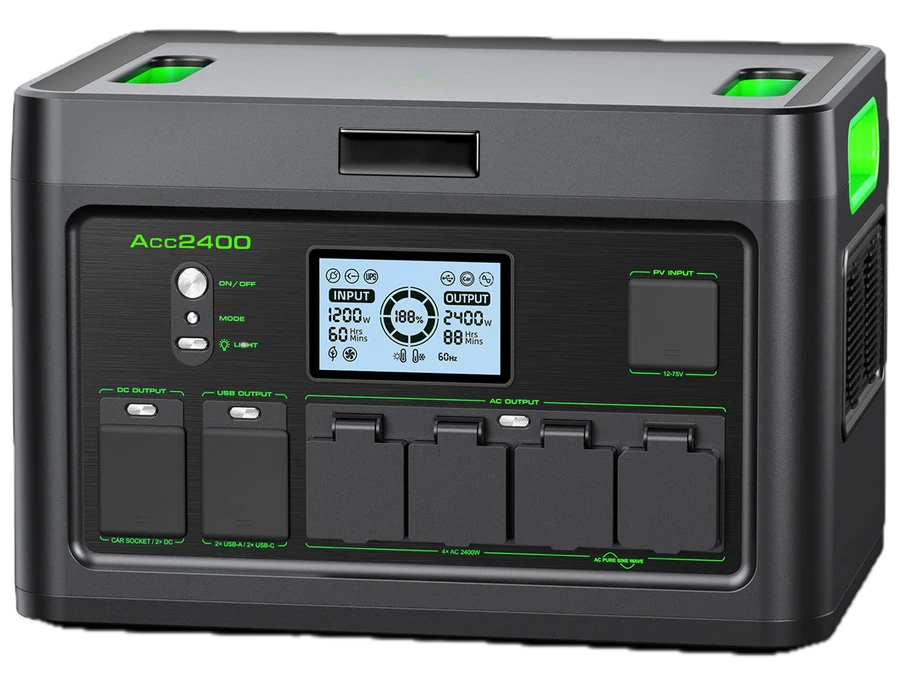
GRECELL 2400W Portable Power Station, 1,843.2Wh LiFePO4
Best forHome-backup and camping buyers who want a LiFePO4 station for refrigerators and power tools
A 1,843.2Wh automotive-grade LiFePO4 power station with a 2,400W pure sine inverter (4,800W surge), 11 outputs and a 1.6 to 2 hour recharge.
Read our verdict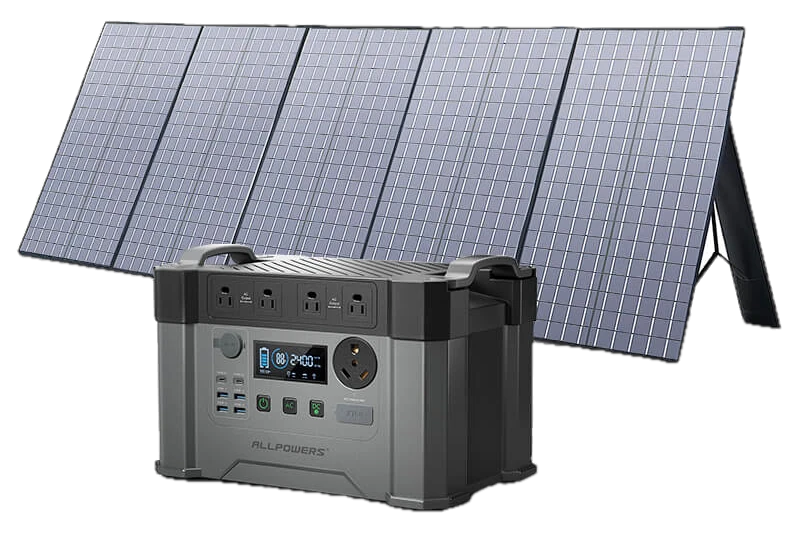
ALLPOWERS Solar Generator Kit 2400W (S2000 Pro + SP037 400W Solar Panel)
Best forCampers, van-lifers and backup shoppers who want a 1.5kWh station and solar panels in one kit
A 1,500Wh, 2,400W S2000 Pro station (4,000W surge) with a 30A RV port, 1,500W AC input and a 400W foldable panel set in one kit.
Read our verdict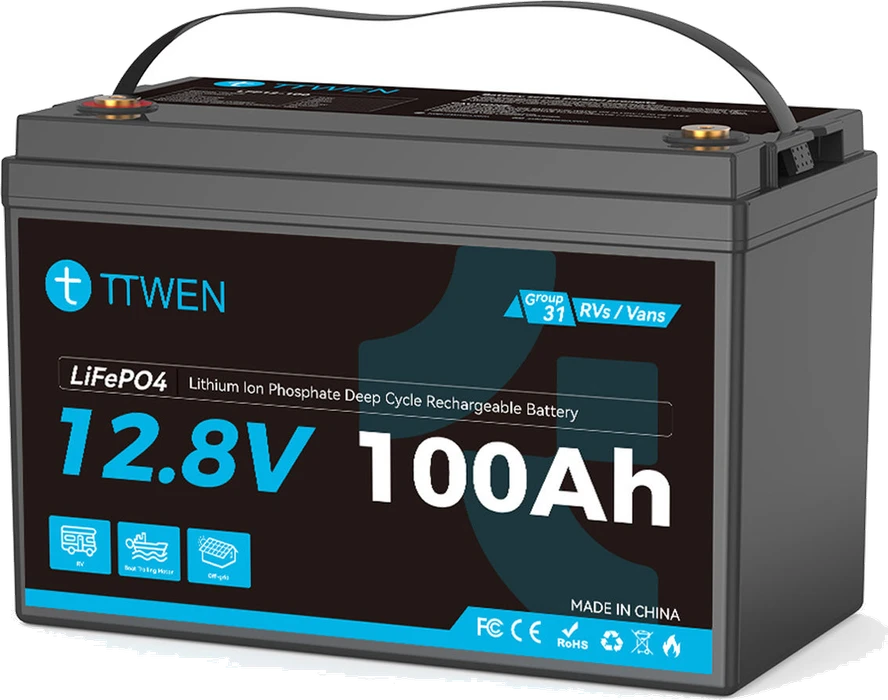
TTWEN 12V 100Ah Group 31 RV LiFePO4 Battery
Best forVan and motorhome owners building a 12V house-power system around a Group 31 LiFePO4 battery
The TTWEN battery combines a 12.8V nominal output and 100Ah capacity in a Group 31 case. It is a deep-cycle battery for a larger 12V setup, so plan the charger, inverter, fusing, and wiring around its limits.
Save about $4.60 with SEGPDGWJ. Price checked October 25, 2026 · LiFePO4 Store store · Store price; tax and shipping shown at checkout.
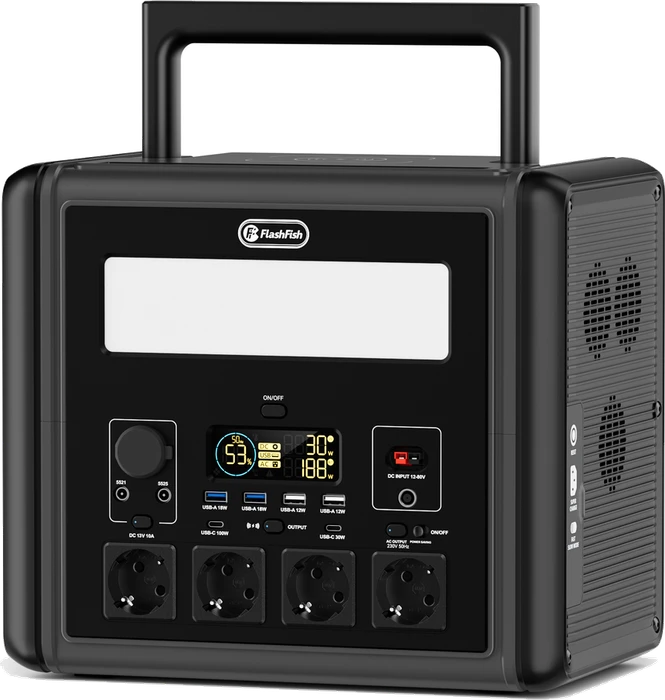
FlashFish T2000 1,536Wh LiFePO4 Portable Power Station (EU)
Best forVehicle campers who need a higher-output LiFePO4 station and will pick the socket version for their region
A 1,536Wh LiFePO4 station rated for 2,000W continuous and 4,000W peak output, with up to 600W solar/DC input.
Save about €50.00 with SEBASTIANBASSOL. Price checked October 21, 2026 · FlashFish EU store · Store price (list EUR 649.99); tax and shipping shown at checkout.
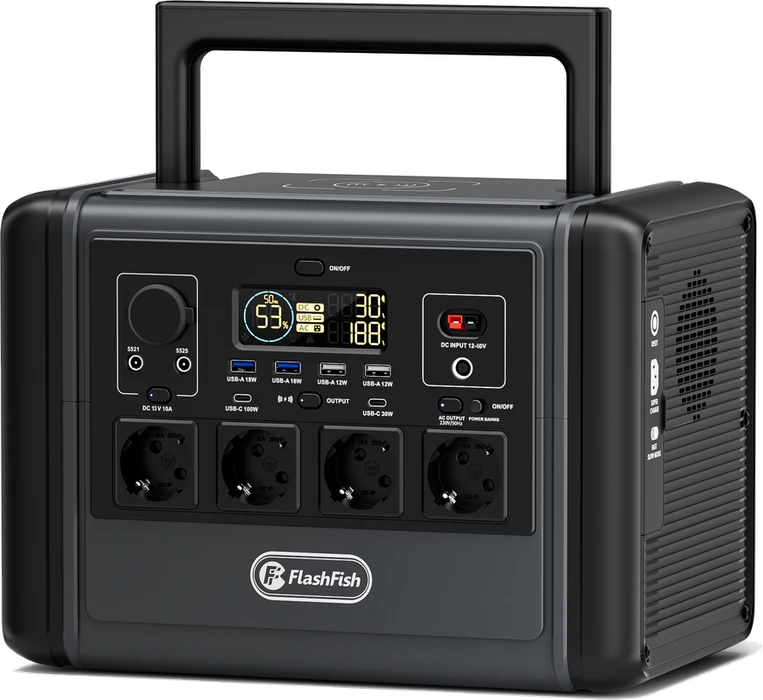
FlashFish T1200S 768Wh LiFePO4 Portable Power Station (EU)
Best forCar campers and van travelers who want a mid-size LiFePO4 station with four EU AC outlets and up to 400W solar or DC input
A 768Wh LiFePO4 station with 1,200W rated and 2,400W peak output, four 230V/50Hz pure-sine AC outlets, and up to 400W solar or DC input.
Save about €34.00 with SEBASTIANBASSOL. Price checked October 21, 2026 · FlashFish EU store · Store price (list EUR 479.99); tax and shipping shown at checkout.
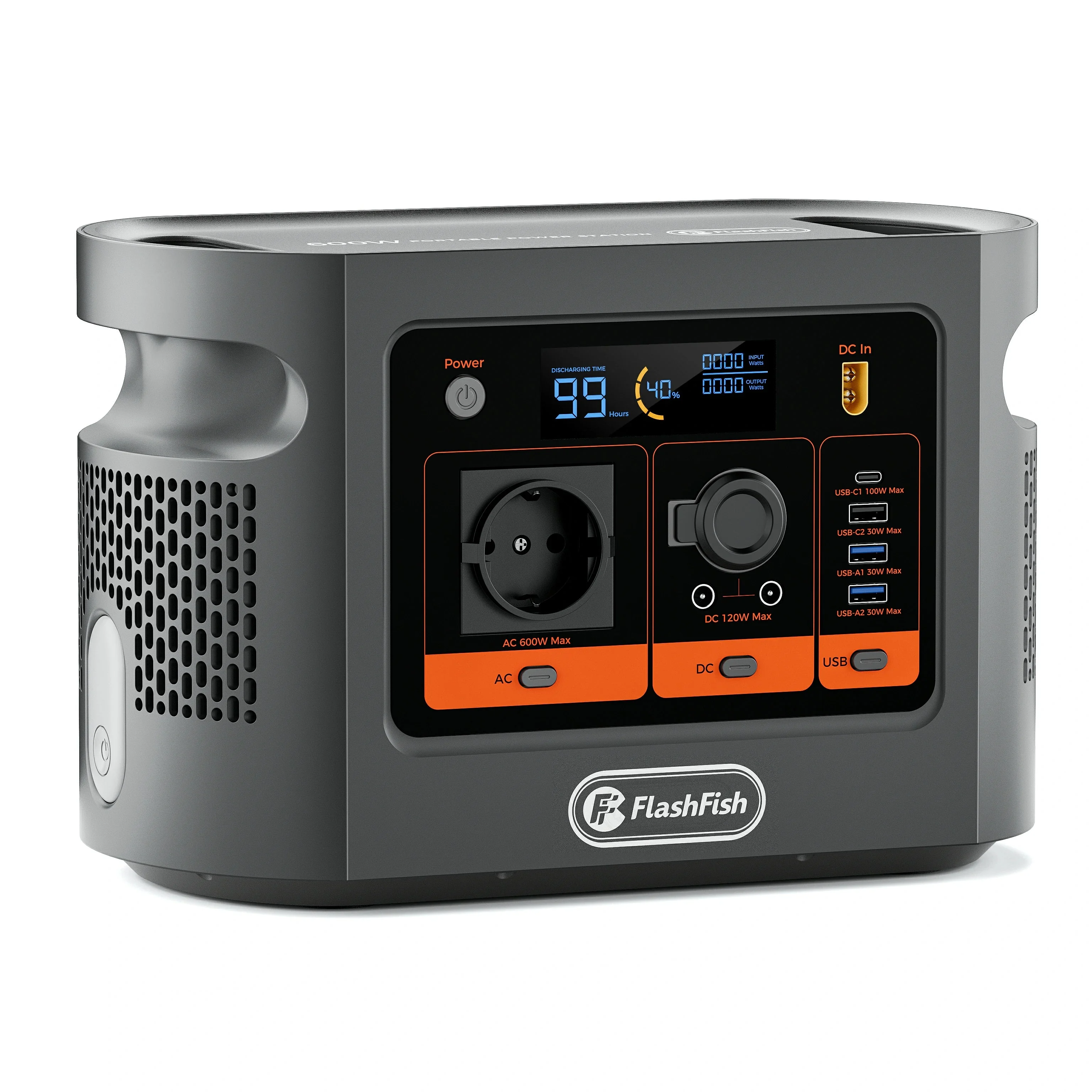
FlashFish E106B EU Portable Power Station
Best forCar campers and day-trip users powering modest electronics from the EU outlet version
We recommend the EU FlashFish E106B for car campers who want a compact station for lights, laptops and other modest loads. Its listed 384Wh LiFePO4 capacity pairs with up to 600W shared pure-sine AC output and a 100W USB-C port; the standalone EU version has one 230V, 50Hz AC outlet, so match the outlet and plan the load before buying.
Save about €20.00 with SEBASTIANBASSOL. Price checked October 16, 2026 · FlashFish EU store · Current sale price; VAT included. Shipping is calculated at checkout.
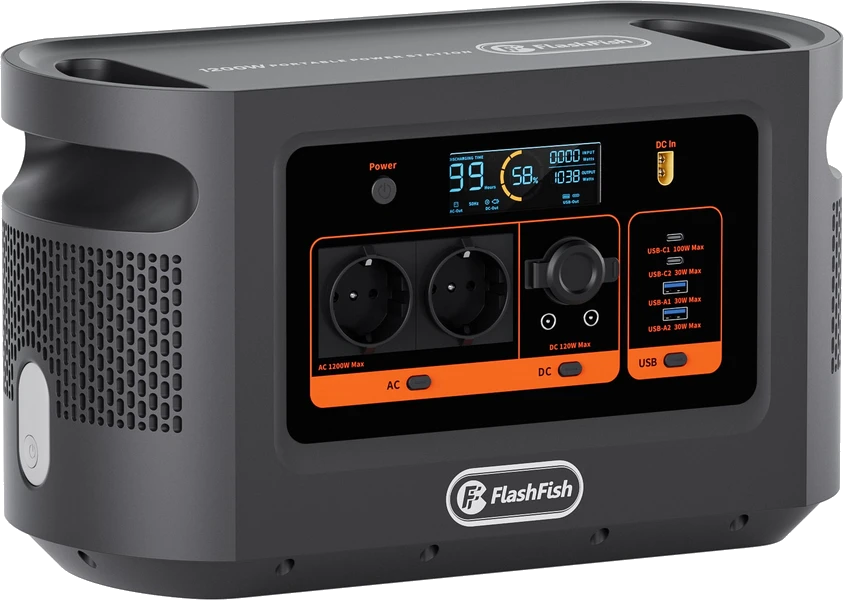
FlashFish E112B EU Portable Power Station
Best forVehicle campers planning a mixed load list who want roughly 1kWh of stored energy
We recommend the EU FlashFish E112B for vehicle camps that need more energy and AC output than a compact station can provide. Its 1,008Wh LiFePO4 battery, 1,200W shared pure-sine AC output and two EU outlets suit a planned mix of compatible devices; the 11.2kg body belongs in a vehicle setup, and runtime still depends on the real load.
Save about €39.00 with SEBASTIANBASSOL. Price checked October 16, 2026 · FlashFish EU store · The official variant record listed the standalone unit in stock at €389.99; solar-panel bundles are separate variants. Confirm tax, shipping at checkout.
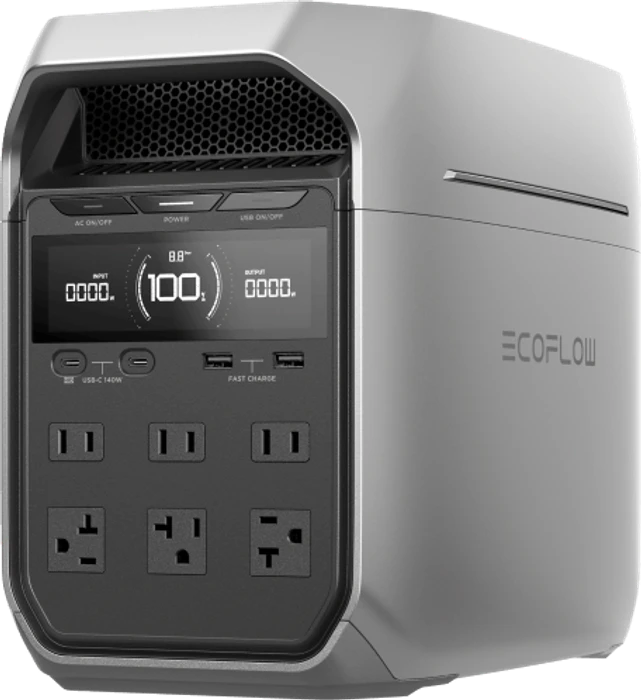
EcoFlow DELTA 3 Plus
Best forVehicle-based camps with a mix of devices
A 1,024Wh LFP power station with 1,800W rated AC output, suited to a camp setup that needs more than a phone power bank.
Read our verdict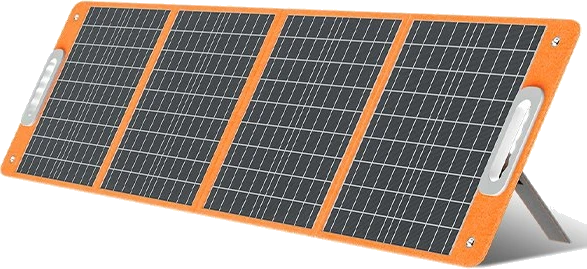
FlashFish TSP100 100W Solar Panel
Best forCampers who want a portable 100W panel that can charge a power station or a laptop directly
A foldable 100W monocrystalline solar panel at 21.5 to 23.5% efficiency with an 18V DC output, a 65W USB-C port, an 18W QC3.0 USB-A port, four kickstands, and a connector set in the box.
Save about €12.00 with SEBASTIANBASSOL. Price checked October 17, 2026 · FlashFish EU store · Store sale price (list EUR 179.99); tax and shipping shown at checkout.
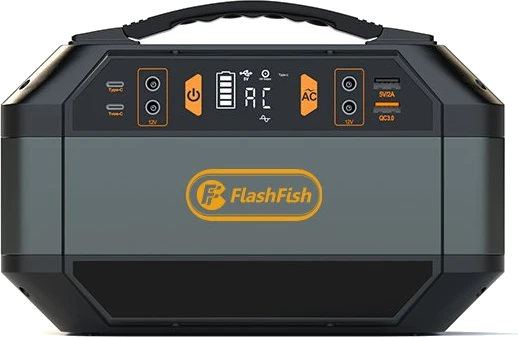
FlashFish P56 288Wh (EU)
Best forCampers and travelers who want a low-price, nine-port power station for phones, laptops, and small appliances
A 4.3kg lithium-ion power station with 288.6Wh, a 330W pure sine AC output with 600W peak, nine ports, an LCD, an LED light, and an 18 to 22V solar input, at EUR 159.89.
Save about €15.99 with SEBASTIANBASSOL. Price checked October 17, 2026 · FlashFish EU store · Store sale price (list EUR 199.99); a P56 + TSP60 kit is EUR 239.88. Tax and shipping shown at checkout.
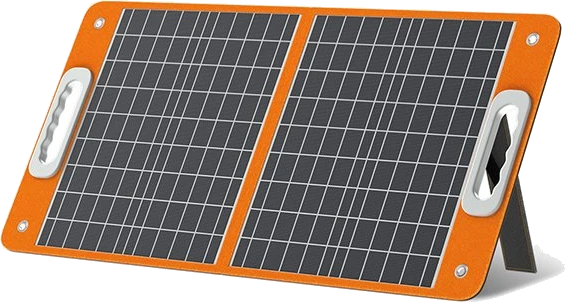
FlashFish TSP60 60W Solar Panel
Best forCampers and hikers who want a light foldable panel for small power stations, phones, and tablets
A 4.19 lb foldable 60W monocrystalline ETFE solar panel at 21.5 to 23.5% efficiency with an 18V DC output, a 45W USB-C PD port, an 18W QC3.0 USB-A port, two kickstands, and a connector set in the box.
Save about €8.00 with SEBASTIANBASSOL. Price checked October 17, 2026 · FlashFish EU store · Store sale price (list EUR 109.99); tax and shipping shown at checkout.
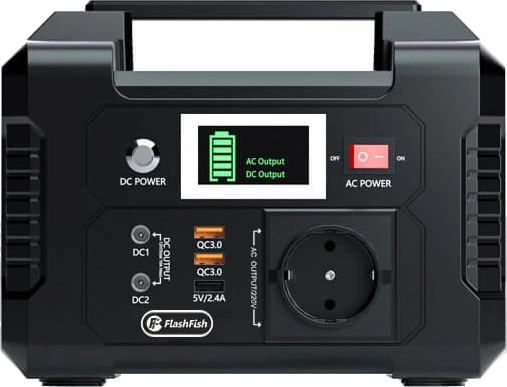
FlashFish E200 151Wh (EU)
Best forCampers and travelers who want a very light, low-cost station for phones, tablets, lights, and a laptop
A 1.85kg power station with 151Wh nominal capacity, a 230V AC outlet rated at 200W (400W peak, modified sine wave), two 12V DC outputs, three USB-A ports, and wall, car, or solar charging, at EUR 99.99.
Save about €10.00 with SEBASTIANBASSOL. Price checked October 17, 2026 · FlashFish EU store · Store sale price (list EUR 159.99); an E200 + TSP60 kit is EUR 169.99. Tax and shipping shown at checkout.
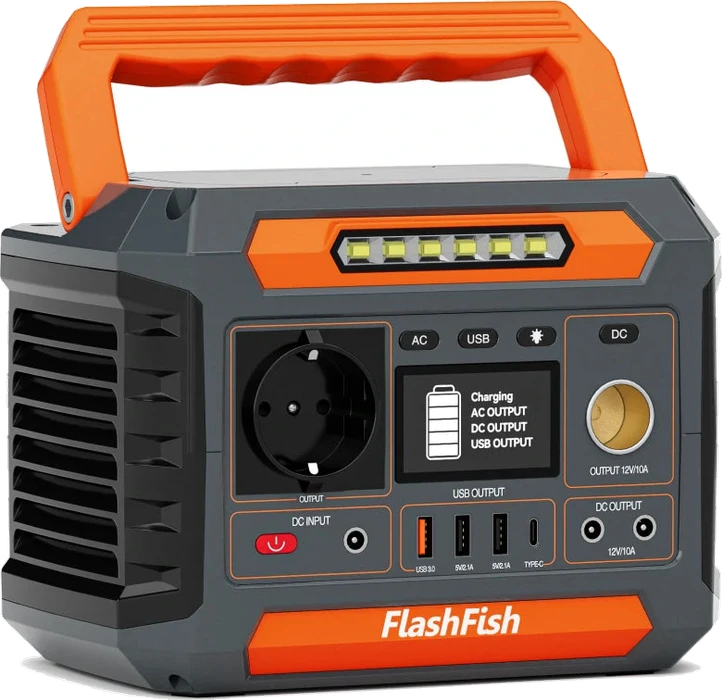
FlashFish P66A 144Wh (EU)
Best forCampers and travelers who want a low-cost station with a car socket and plenty of ports
A 2kg power station with 144.3Wh, a 230V AC outlet rated at 200W, USB-A, QC USB-A and USB-C, two DC5521 outputs, a 12V vehicle socket, an LED light bar, and wall, car, or 13 to 22V solar charging, at EUR 89.99.
Save about €9.00 with SEBASTIANBASSOL. Price checked October 18, 2026 · FlashFish EU store · Store sale price (list EUR 189.99); a P66A + TSP60 kit is EUR 159.98. Tax and shipping shown at checkout.
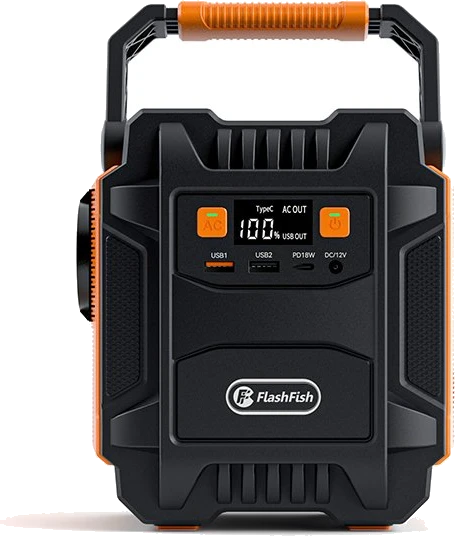
FlashFish A201 173Wh (EU)
Best forHikers and campers who want a light station with a built-in lantern mode for a tent
A 1.7kg power station with 172.8Wh of lithium-ion capacity, a 230V AC output rated at 200W with a 400W peak, a 12V DC output, an 18W USB-C PD port, USB ports, an SOS and strobe LED light, and wall, car, or solar charging.
Save about €11.00 with SEBASTIANBASSOL. Price checked October 18, 2026 · FlashFish EU store · Store sale price (list EUR 159.99); an A201 + TSP60 kit is EUR 159.98. Tax and shipping shown at checkout.
Our approach
Written by Outdoor Gear Verdict Editorial. Grounded in published lithium battery chemistry data and manufacturer cycle ratings. Always follow local regulations and the manufacturer instructions for your equipment. Read our editorial standards.